


DT-ATSC Series (Off-Air Processors)

Reliable, Scalable, and Efficient Digital TV & IPTV Distribution Solutions

The DT-ATSC Series includes a range of advanced hardware for seamless signal processing and IPTV integration. Whether building from scratch or enhancing a current setup, these solutions deliver unmatched efficiency and flexibility.
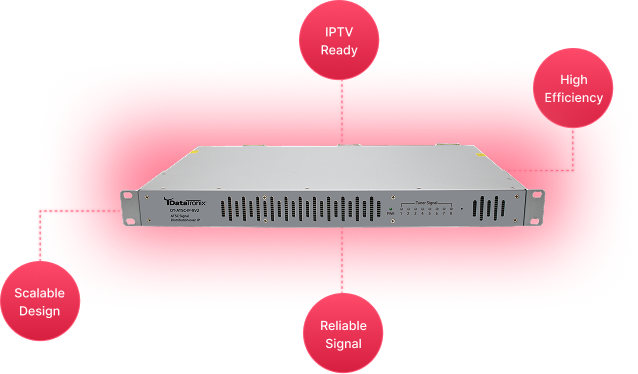
ZeeVee Image

Key Features Across the DT-ATSC Series

Migrating to Linear 101 Image Migrating to Linear 101

Handles both ATSC 8VSB and QAM (64/256) signals.

User-Friendly Interfaces Image User-Friendly Interfaces

Web-based GUIs simplify configuration, monitoring, and management.

Compact Design Image Compact Design

Space-saving 1RU form factors fit easily into existing rack setups.

Scalable Output Options Image Scalable Output Options

Choose between QAM outputs for traditional coaxial systems or IP streams for modern networks.

Reliable Performance Image Reliable Performance

Built for continuous operation with features like fan status monitoring and system uptime indicators.
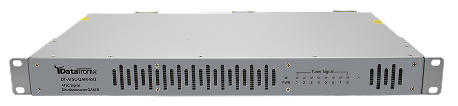
QAM Distribution System

COM3000 Image

DT-ATSC-QAM-8V2

  • Advanced 8-Channel QAM Modulator
  • Enhanced version with diagnostic features.
  • Real-time RF monitoring (SNR, signal level, frequency).
  • Dual tuners per input, fan monitoring, and uptime reporting.
  • Designed for high-reliability installations.

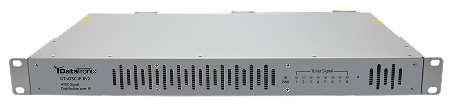
IPTV Distribution System

COM3000 Imagess

DT-ATSC-IP-8V2

  • IP Output Modulator with Advanced Controls
  • Supports SPTS output configuration per channel.
  • Stream status, IP destination, TTL, and bitrate monitoring.
  • Front-panel indicators and full remote access.
  • Designed for smart IPTV infrastructure.

Why Choose DT-ATSC Series?

Migrating to Linear 101 Image

Universal Compatibility

Works with both ATSC 8VSB and QAM (64/256) signals, enabling use with virtually any U.S. broadcast source or cable input.

Scalable Output Options Image

Flexible Output Options

Choose between QAM output for traditional coaxial systems or IP streaming for modern IPTV networks.

Reliable Performance Image

High Density & Space Saving

All models are built in a 1RU chassis, reducing rack space while maximizing performance.

Scalable Output Options Image

Intuitive Management

Web-based graphical interfaces allow quick configuration, real-time status checks, and remote diagnostics.

Reliable Performance Image

Scalable Architecture

Easily stack and expand as your property or system grows. Perfect for multi-building or multi-zone deployments.

Ideal For

Deliver FREE Off-The-Air Channels to hotels, prisons, senior living, hospitals and more.

Migrating to Linear 101 Image

Hotels & Hospitality

User-Friendly Interfaces Image

Universities & Schools

Compact Design Image

Hospitals & Healthcare

Compact Design Image

Prisons

Ready to optimize your TV distribution system?

Get expert advice, detailed specs, and a custom quote tailored to your needs.

Get Started with
Nokia FTTH Today

consultation

Get a free quote and discover how Nokia FTTH can boost speed, reliability, and scalability for your business.

FAQs: Nokia FTTH Solutions

What is ATSC and how does it work?
ATSC (Advanced Television Systems Committee) is the digital television broadcast standard used for over-the-air TV transmission in the United States and several other countries. It uses digital modulation (8VSB) to transmit high-definition video, audio, and data efficiently to compatible receivers.
What is the difference between ATSC and QAM?
ATSC is used for over-the-air broadcast transmission, while QAM (Quadrature Amplitude Modulation) is commonly used in cable TV systems. ATSC signals are transmitted via antennas, whereas QAM signals travel through coaxial cable infrastructure. ATSC to QAM converters allow broadcast signals to be redistributed over cable networks.
What is an ATSC to QAM converter used for?
An ATSC to QAM converter receives over-the-air digital TV signals and converts them into QAM format for distribution over a coaxial cable system. This is commonly used in hotels, hospitals, campuses, and commercial buildings to distribute local broadcast channels without needing separate antennas for each TV.
What is ATSC 3.0 and how is it different from ATSC 1.0?
ATSC 3.0, also known as NextGen TV, is the latest version of the ATSC broadcast standard. It supports 4K resolution, improved audio, better reception, mobile compatibility, and IP-based transmission. ATSC 1.0 is the earlier digital standard primarily supporting HD broadcasts.
Can ATSC signals be converted to IP for IPTV systems?
Yes. ATSC signals can be converted into IP streams using professional broadcast processing equipment. This allows organizations to distribute live TV channels over Ethernet networks as part of an IPTV or digital signage system, making it suitable for modern enterprise video distribution.